
The New Legal Labor Model: AI, Efficiency, and Billing Transparency
When a senior partner is assigned to lead major litigation for a Fortune 500 company, legal departments budget accordingly to account for premium expertise and high-value strategy.
Yet, when the invoices arrive, a different reality often emerges. Bills are overrun with a $1,250-an-hour partner reviewing discovery documents, drafting routine emails, or proofreading briefs. All tasks that do not require partner-level judgment.
But in a world where AI can now perform many of these same tasks faster and at a fraction of the cost, the fundamental question in-house teams must ask has changed entirely.
The question is no longer who is performing the task, but rather why this task is using human labor at all.
From Role Misalignment to Labor Misclassification
Role-task misalignment is now a broader, more consequential issue: labor misclassification.
In the traditional legal model, inefficiency occurs when a partner handles associate-level tasks, or an associate does paralegal work. In the emerging model, inefficiency happens anytime a human performs work that could be done entirely or materially accelerated by AI.
AI is now a viable alternative for routine legal workflows, shifting the benchmark for pricing. This shift matters because AI isn’t just another tool—it represents a new labor category.
The Hidden Cost of Ignoring the AI Labor Category
Legal departments have long accepted some level of staffing inefficiency as the cost of doing business. But that tolerance breaks down when AI enters the equation.
The financial impact compounds quickly on both sides of the aisle:
Budget Leakage: Paying senior rates for work that could be automated or AI-assisted
Missed Efficiency Gains: Failing to capture time compression that AI enables
Outdated Pricing Models: Continuing to bill hourly for work whose marginal cost has dropped significantly
Credibility Gaps: Firms that ignore AI-enabled efficiencies appear increasingly out of step with client expectations
What was once an inefficiency problem is now a far greater missed opportunity—one that could leave law firms trailing their peers and corporate legal departments overpaying for outdated practices.
Is Your Invoice Review Process Built for an AI-Enabled World?
Most legal invoice review processes are built for an obsolete ecosystem. Automated or manual, these systems typically verify agreed-upon rates, check time entries, and ensure basic compliance with guidelines.
But they don’t answer the question that matters most in an AI-enabled environment:
“Was this work priced as if AI were part of the delivery model?”
Without that lens, even perfectly “compliant” invoices can still reflect outdated—and inflated—cost structures.
This is exactly the gap one AmLaw 100 firm set out to close.
A Case Study in Evolving the Labor Model
This AmLaw 100 firm wanted to identify where AI could reliably execute or assist with routine, repeatable, and rule-based tasks.
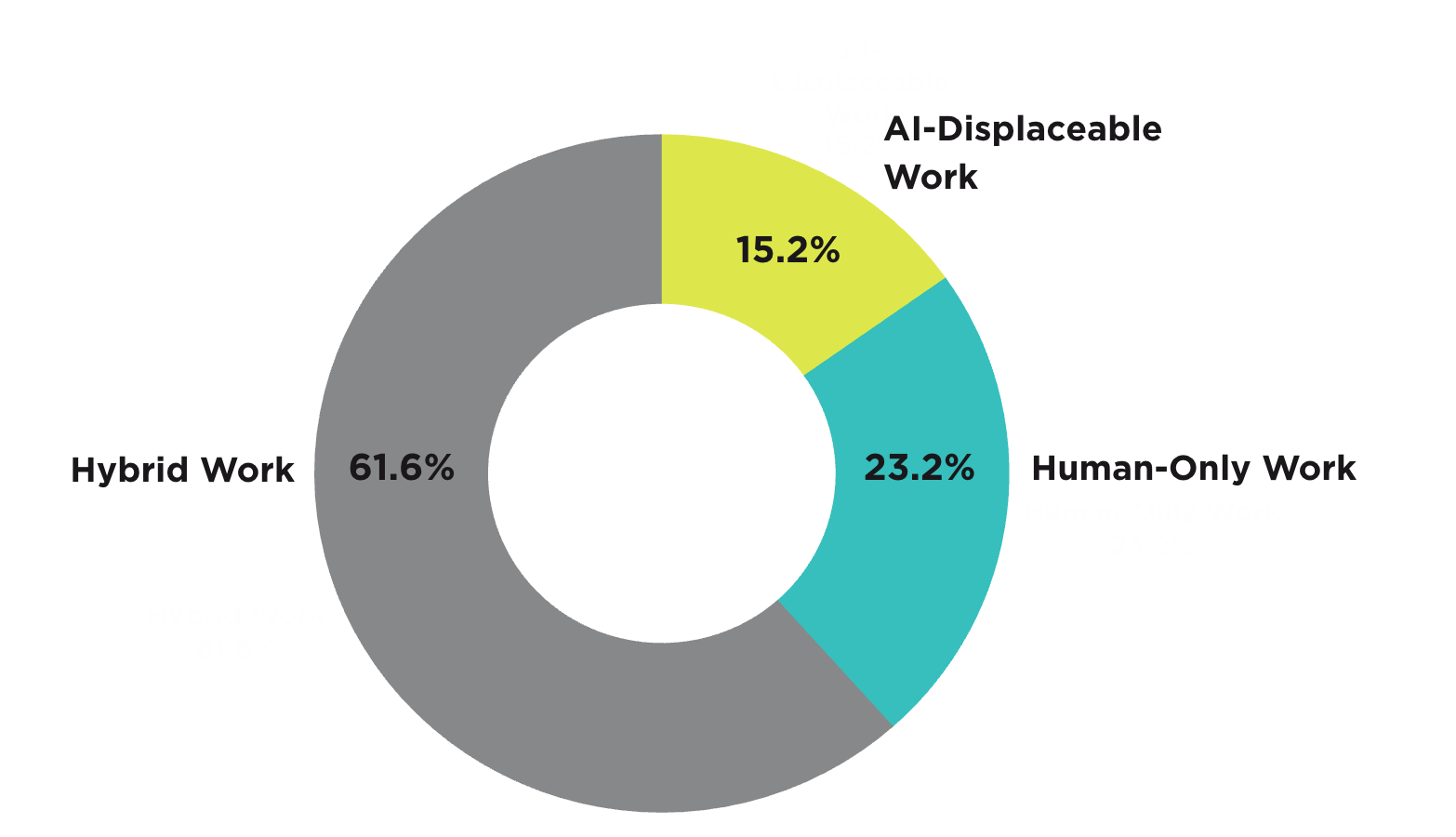
Legal Decoder analyzed $25M of historical work performed by the firm’s attorneys, using detailed billing and matter data to identify, quantify, and prioritize tasks ready for AI replacement without compromising quality or client trust.
Legal Decoder’s analysis found that the firm’s $25M portfolio could be broken up as follows:
· AI-Displaceable Work ($3.8M): Tasks that AI performs and dramatically compresses the delivery time.
· Hybrid Work ($15.4M): Tasks that AI assists with but still require human review and finalization. This requires new pricing structures.
· Human-Only Work ($5.8M): Tasks that are judgment-intensive and where a law firm’s premium is justified.
With this visibility, Legal Decoder positioned the firm for a fundamental transformation in how legal work is delivered and priced, enabling lawyers to focus on complex analysis, strategic judgment, and strengthening client relationships.
From Staffing Discipline to Pricing Transformation
The biggest shift isn’t operational—it’s economic.
AI forces a shift from input-based pricing (hours × rates) to output-based pricing (value of the task, regardless of how it’s completed). As a result:
Firms can still command premium pricing—but only for truly high-value work
Routine work must reflect AI-adjusted cost structures
Legal departments gain leverage by anchoring pricing in modern delivery realities
“Who Did the Work?” How Was the Work Completed?
For years, legal departments have focused on ensuring the right people are doing the work. But AI changes the frame entirely.
Now the critical question is:
What is the most efficient way this work can be done—and how should it be priced accordingly?
Role alignment was the first step toward financial discipline. Recognizing AI as a labor category is the next.
Want to see how your portfolio breaks down across AI-displaceable, hybrid, and human-only work?