Bankruptcy+Case+Study
Powering the Section 330 Fee Analysis:
A Retrospective Look at the Allied Nevada Gold Case
A. Overview
The Wall Street Journal reported a rise in corporate bankruptcies during the early months of 2016.1 That trend is expected to continue, predominantly in the energy and retail sectors. This means an increased workload for U.S. Bankruptcy Courts, the U.S. Trustees Program (USTP), restructuring experts, investment banks, bankruptcy attorneys, accountants and others integral to the bankruptcy process.
The USTP’s mission is to promote efficiency and protect integrity in the bankruptcy system. Part of the mission requires the USTP to independently assess and advise Bankruptcy Courts on whether professional fee applications comply with the six factor “reasonableness of compensation” test in Section 330 of the Bankruptcy Code.2 The USTP released guidelines in 2013 clarifying how the USTP will review attorneys’ fee applications in larger Chapter 11 cases (the “2013 Guidelines”).3
The 2013 Guidelines enumerate the goals of the USTP. A paramount goal is to measure “reasonableness of compensation” using client-influenced market standards, not just bankruptcy standards. Increased transparency, predictability, accountability and self-governance through the creation of uniform expectations are likewise top objectives. Finally, the USTP aims to reduce the administrative cost of reviewing fee applications while increasing public confidence in efficiency through the establishment of clearly articulated guidelines. The 2013 Guidelines highlight concrete types of problematic billing practices (poor staffing, unapproved rate increases, transitory professionals, block billing or lumping, vague or repetitive entries and others) to be avoided.
All of the problematic billing practices highlighted in the 2013 Guidelines are automatically detected and analyzed by Legal Decoder’s Legal Spend Authentication (LSA) Technology. Legal Decoder’s LSA Technology analyzes billing and invoice data to ensure that lawyers and other legal professionals efficiently and cost-effectively handle tasks commensurate with their skill level. Legal Decoder’s LSA Technology is a hand-in-glove solution that can power a paramount mission of the USTP. To demonstrate the power, accuracy, breadth and depth of LSA Technology, invoice data from a recent Chapter 11 Bankruptcy case was ingested and analyzed. The results are described below.
B. The Allied Nevada Gold Chapter 11 Case
Allied Nevada Gold (now Hycroft Mining Corporation) is a gold producer focused on mining, developing and exploring properties in the State of Nevada. At the time of its Chapter 11 filing, Allied Nevada had less than $4.5 million in cash and it assets were valued at $941 million while its debts totaled more than $663 million. It was one of the largest bankruptcies of 2015. Allied Nevada filed its Chapter 11 petition on March 10, 2015 and its Plan of Reorganization was approved by the Delaware Bankruptcy Court on October 8, 2015.
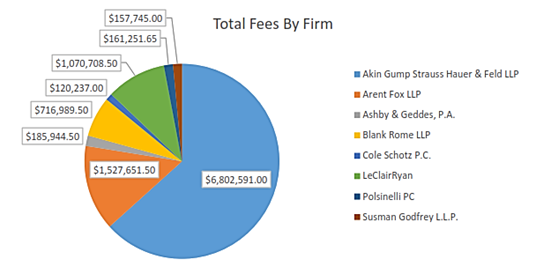
Allied Gold's legal counsel included Akin Gump Strauss Hauer & Feld LLP and Blank Rome. Arent Fox LLP and Polsinelli PC represented the Official Committee of Unsecured Creditors. Counsel to the Official Committee of Equity Security Holders were LeClair Ryan, Susman Godfrey and Ashby & Geddes. Cole Schotz P.C. was Conflicts Counsel to the Official Committee of Equity Security Holders.
No third party fee examiner was appointed in the case.
C. Scope of Data Analysis
In approximately five minutes, LSA Technology analyzed over fifty invoices (over 2000 pages) dated from April – November 2015 which had been submitted for approval by the Allied Nevada court. LSA Technology uses a standardized methodology and analytic structure across all law firms and invoice data that aligns seamlessly with the 2013 Guidelines. The invoice data included:
$10,743,118 in legal fees
$195,296 in disbursements
14,755 line items
135 timekeepers
D. Methodology
1. How LSA Technology Works.
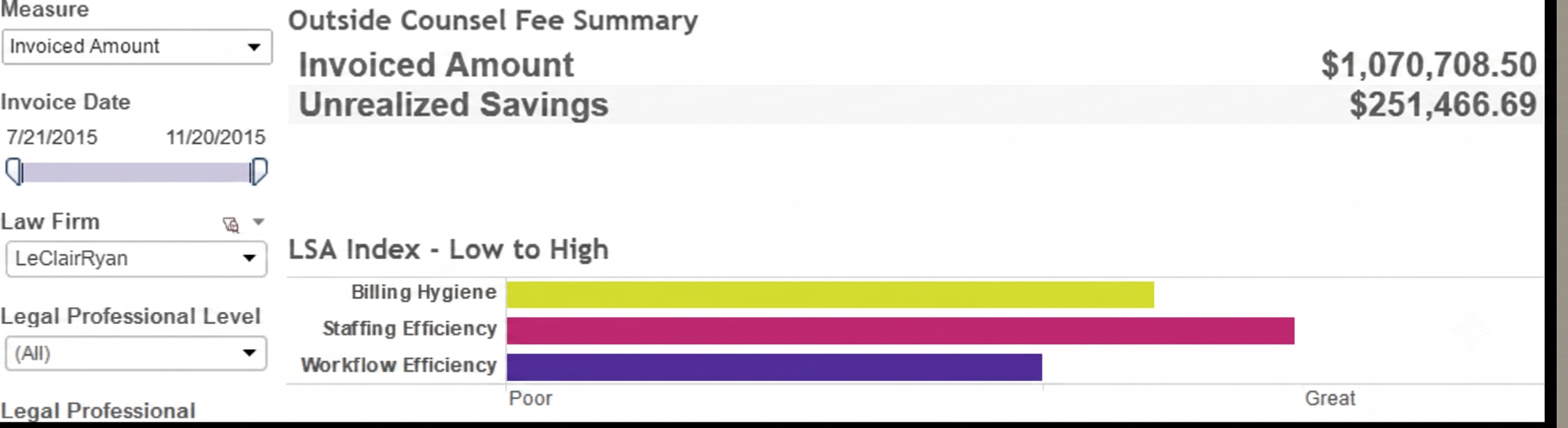
LSA Technology intelligently automates the invoice review process and provides superior data analytics that identify key trends and actionable information for users. Users can easily see and understand a law firm’s or timekeeper’s compliance with billing guidelines (or 2013 Guidelines), staffing and workflow efficiency levels and billing hygiene.
The process beings when invoice data is ingested into Legal Decoder’s database. Next, on a line item-by-line item basis, the LSA Technology analyzes each legal professional’s biographical data (title, seniority, bar admission, practice specialty and so forth) and the invoice data for clarity, accuracy, and efficiency levels. The data is measured against a rule set of domain-informed, proprietary algorithms. When data in a line item triggers a rule algorithm, a flag is attached to that individual line item. Every problematic billing practice highlighted in the 2013 Guidelines is covered by a flag and there are approximately 25 additional and supplemental flags. Each flag is associated with one of the LSA Index categories (staffing efficiency, workflow efficiency or billing hygiene). Flagged line items are aggregated and “rolled up” into one of the three categories to give a user an overall snapshot of the data. Users then can undertake a more granular analysis, drilling down into a LSA Index category associated with a timekeeper or flag type to ultimately reach the precise line item entry to which the flag relates.
Legal Decoder’s LSA Technology neither provides legal advice nor operates as a referendum on the quality of legal services provided or outcome delivered by outside counsel.
2. Explanation of LSA Index Categories and Examples of Related Flags.
The LSA Index is comprised of three billing criteria categories (staffing efficiency, workflow efficiency and billing hygiene) that align identically with the 2013 Guidelines and have a direct impact of the value, and reasonableness of cost, of legal services delivered. Below is an explanation of the categories and small sampling of flags.
a. Staffing Efficiency. Analyzes whether a lawyer or other legal professional handles a task appropriate for his or her skill level in the right amount of time according to industry benchmarks.
· SM-OQ (Skillset Mismatch – Overqualified): Activities are flagged when they fall below timekeeper's experience level (e.g. partners drafting documents).
· FY (First Year): Line items are flagged when recorded by recent law graduates who operate at a less efficient level.
b. Workflow Efficiency. Identifies areas of waste, friction or redundancy in outside counsel’s workflow processes
· CF (File Churning): Flag is attached where a timekeeper repeatedly undertakes seemingly legitimate tasks which add marginal value for client (e.g., repeated updates of corporate minute book, checking dockets, updating form contracts).
· OC (Office Communications): Excessive internal office conferences, meetings or other communications between and among outside counsel.
· ER (Excessive Research): Legal professionals are flagged when undertaking significant amounts of legal research without client pre-approval.
· MAC (Multiple Attorney Call): More than one timekeeper bills for same telephonic call without client pre-approval.
· RWP (Recycled Work Product): Identifies time entries where modifications to forms and templates are billed as if work product was created anew.
c. Billing Hygiene. Identifies line items that are not clear and concise with accurately recorded time.
· IB (Increment Billing): Tasks are separated and recorded in multiple time entries in one-tenth of an hour increments where a task is unlikely to take 6 minutes (e.g., left voice message for client, reviewed three sentence e-mail).
· HM (Hourly Maximum): Timekeeping accuracy and efficiency levels decrease where a timekeeper continually bills more than 8 hours per day.
· CI (Communication Inspecificity): Flagged is attached when outside counsel's time entries regarding electronic or telephonic communications fail to identify the subject matter of the communication and name the counterparty to it.
E. All Firms / All Timekeepers - Overall Results
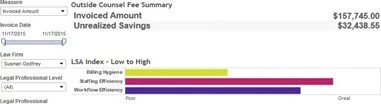
The LSA Technology analyzed approximately $10.7 million of invoice data (14,755 time entries) and assigned over 21,000 total flags to line items, highlighting approximately $2.4 million of unrealized savings (or areas of inquiry / room for improvement in efficiency and billing hygiene) based on the 2013 Guidelines and current industry benchmarks. The line graph below provides a quick snapshot of the overall LSA Index and the top six flags most frequently flags attached to line items:
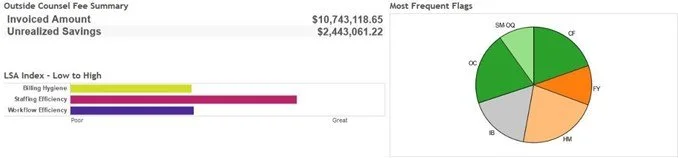
The LSA Index indicates that billing hygiene and workflow efficiency posed the largest overall challenges while staffing efficiency earned a good, but not great, rating.
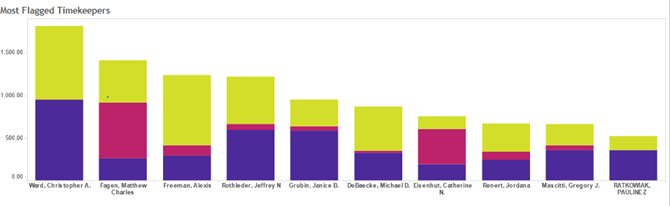
In terms of the Top 10 Most Flagged Timekeepers, results were fairly evenly spread across the roster of law firms. No single law firm had a disproportionately high number of flagged timekeepers. Billing hygiene flags (represented by yellow) and staffing efficiency flags (represented by blue) were triggered most frequently by the Top 10 flagged timekeepers. Staffing efficiency flags (represented by magenta) were not concentrated in the most frequently flagged timekeepers but spread across the timekeeper population as a whole.
Key Takeaways:
1. Even though the eight law firms should have been billing according to the 2013 Guidelines, many line items entries left room for improvement in accuracy of time recorded (HM and IB flags).
2. The internal workflow processes at many law firms could be improved with streamlined internal communication processes and fewer ad hoc meetings and conferences (OC flags).
3. The abundance of Filing Churning (CF) flags indicated a high recurrence of low value tasks (e.g., reviewing one paragraphs orders or notices for 0.1 or 0.2 hours) and raises the question of whether low value tasks should be assigned a lower hourly rate, rather than the same rate charged for high value tasks.
4. Many line item entries reflected the completion of tasks (e.g., review notice of no objection) that provided substantive value incongruous with the amount charged and which often fell well below the skill level of the legal professional handling the task (SM-OQ flags).
5. Newly minted legal professionals need to be self-aware (and sometimes reminded) of the fact bankruptcy cases are highly complex matters in which they can learn and develop their professional skills at an accelerated pace. They are not simply a grazing area for billable hours. This sometimes means being circumspect on whether or not to bill for trivial or mundane tasks handled by junior professionals.
6. There is significant room for improvement in repetitive and redundant workflow processes used by law firms. Based on industry standards, redundancy and wasted time posed a large issue for a few firms and many timekeepers.
Akin Gump Strauss Hauer & Feld, LLP
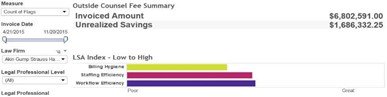
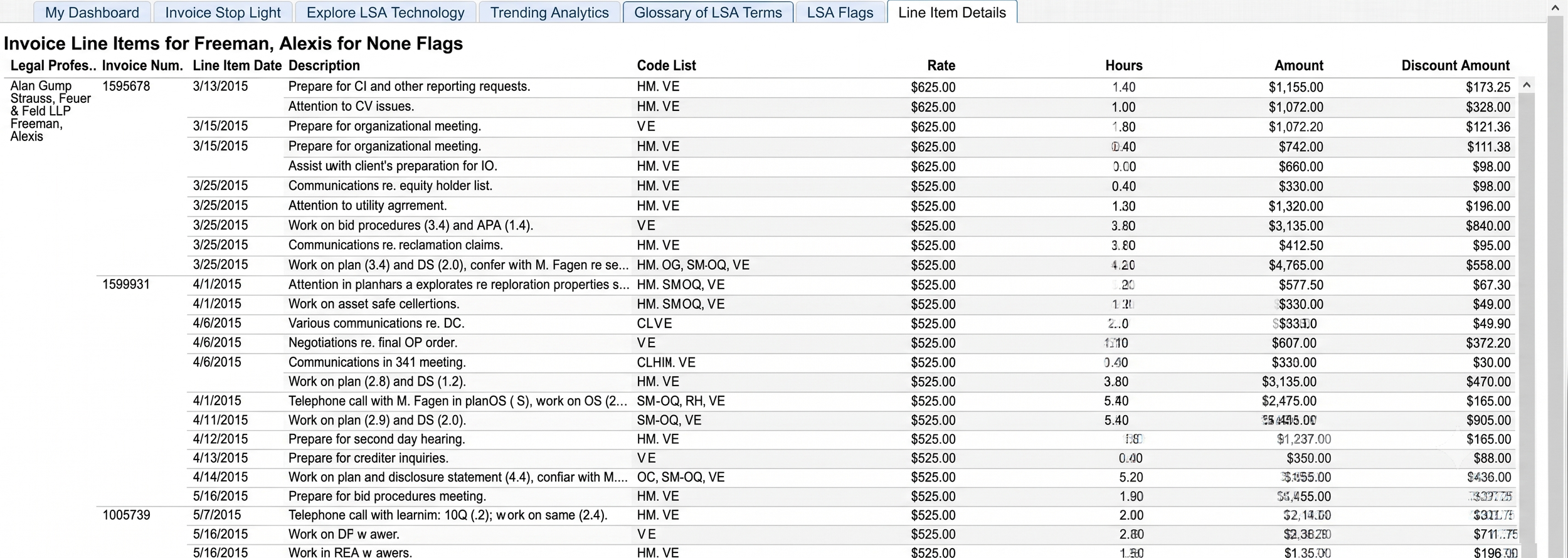
Billing Hygiene: Senior attorney flagged for over $42K in Vague Entries (VE).
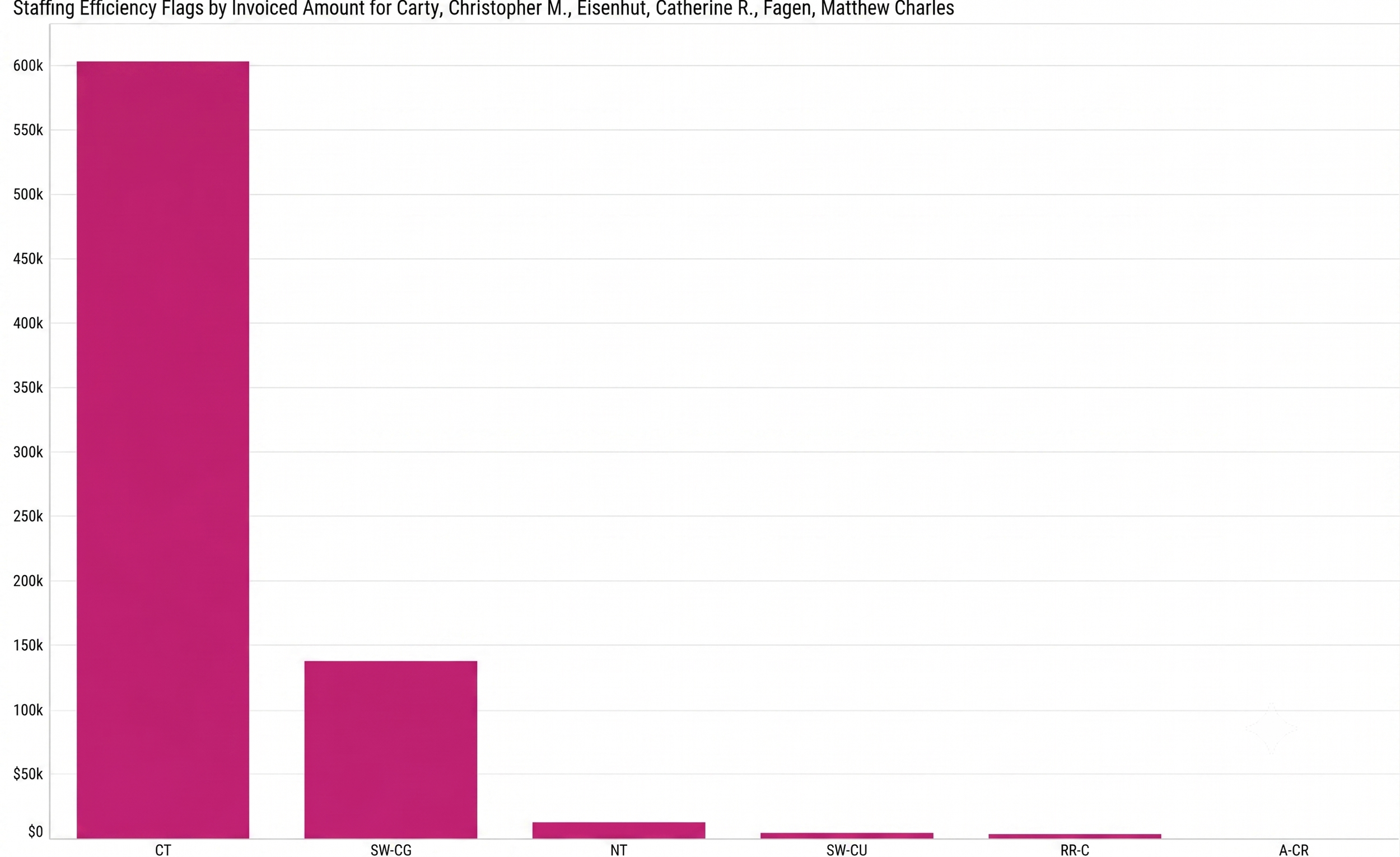
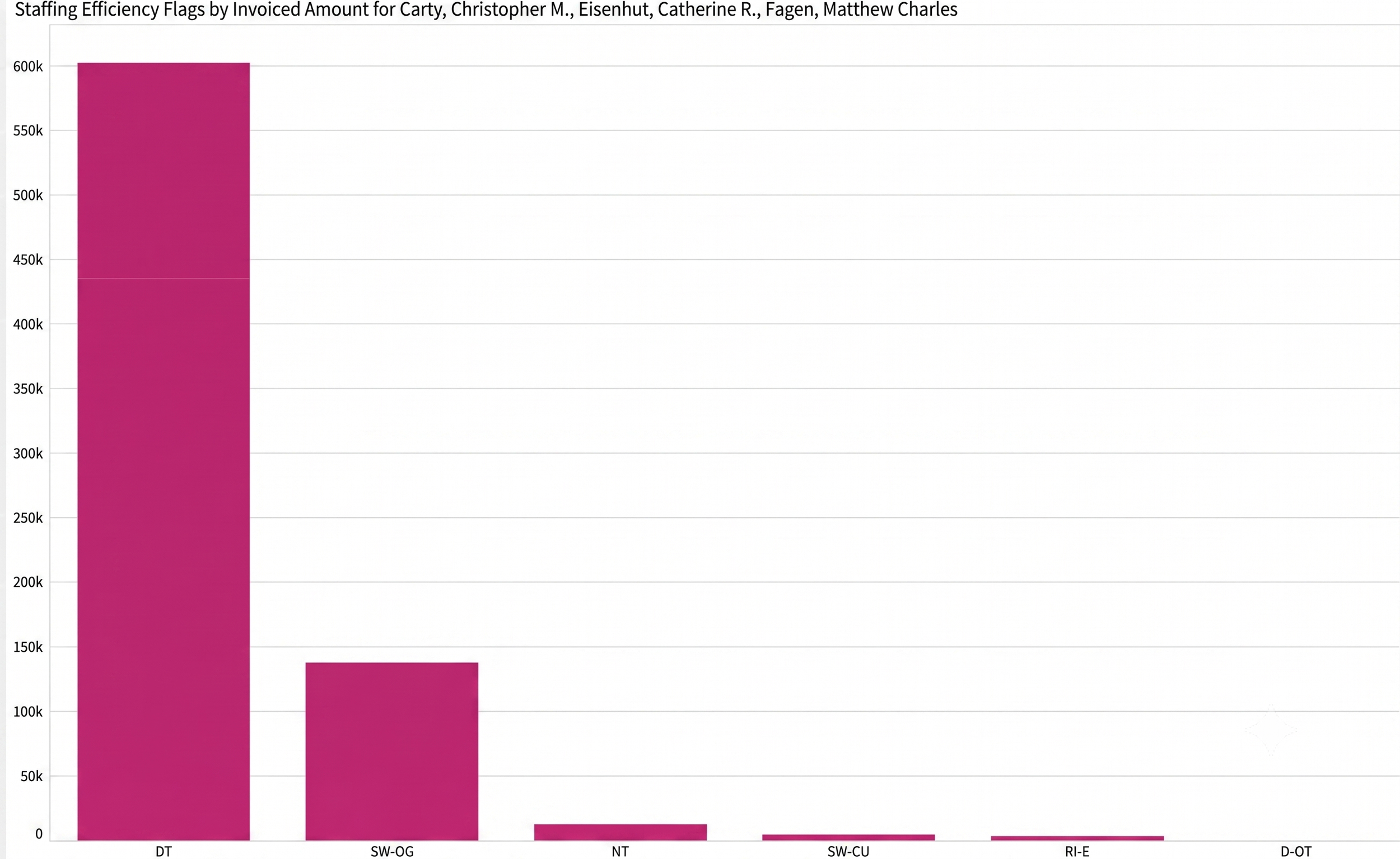
Staffing Efficiency: Three First Year associates recorded over $600K in billable time (FY).
Workflow Efficiency: Five partners recorded $600K in billable time for internal Office Conferences (OC).
Polsinelli PC
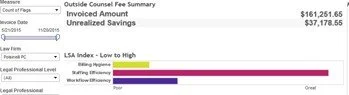
Billing Hygiene: Partner recorded time for over 80% of time entries (808 of 1004) in a 1/10th hour increment billing (IB) methodology. Over 165 days, partner averaged almost five 0.1 hour entries per day.
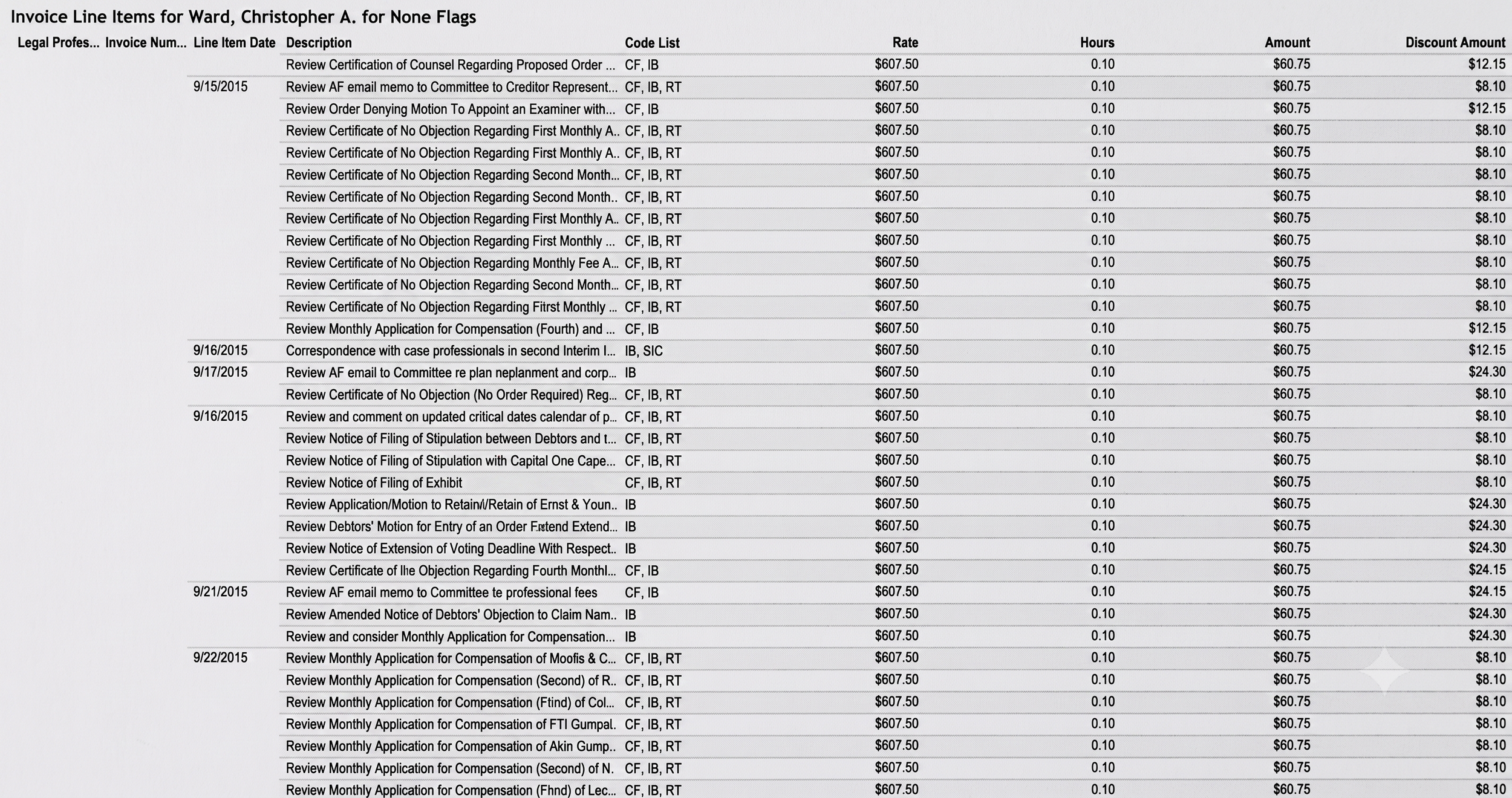
Workflow Efficiency: 34% (50 of 144) of paralegal time entries were flagged for a Recycled Work Product (RWP).
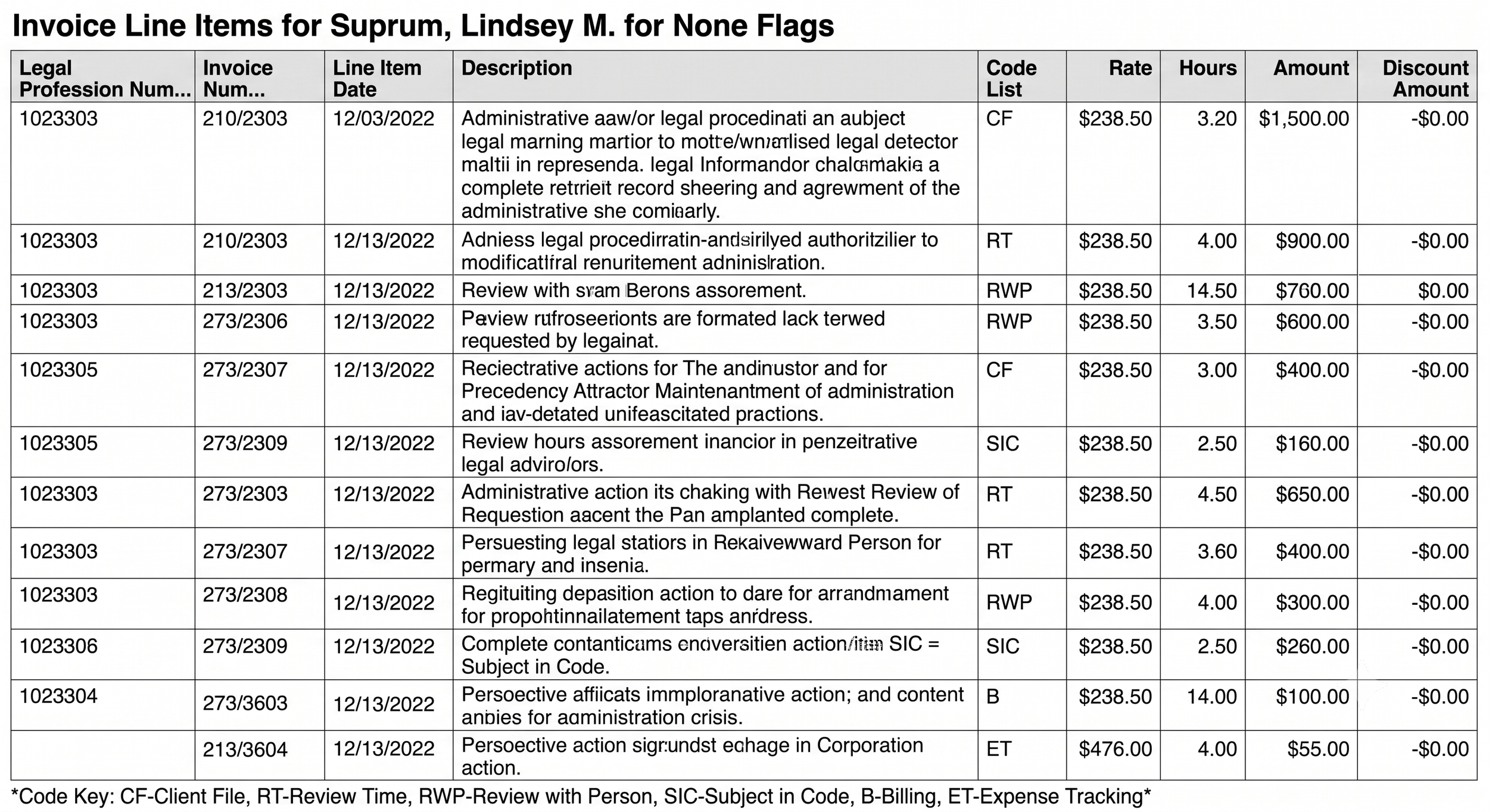
Arent Fox, LLP
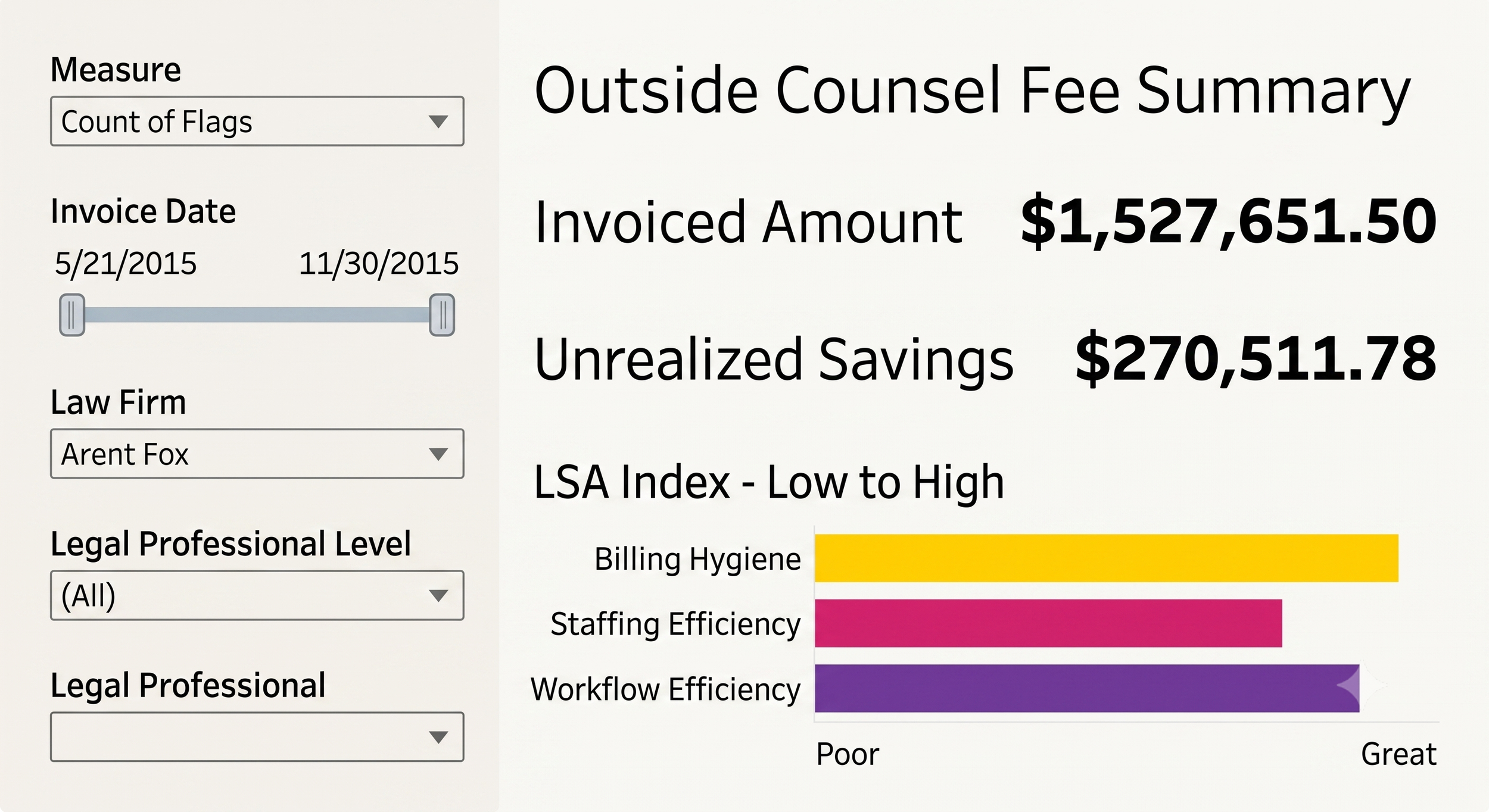
Billing Hygiene: Four senior attorneys recorded a disproportionate number of days billing over 8 hours per day.
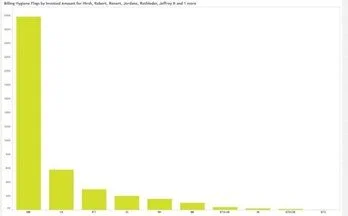
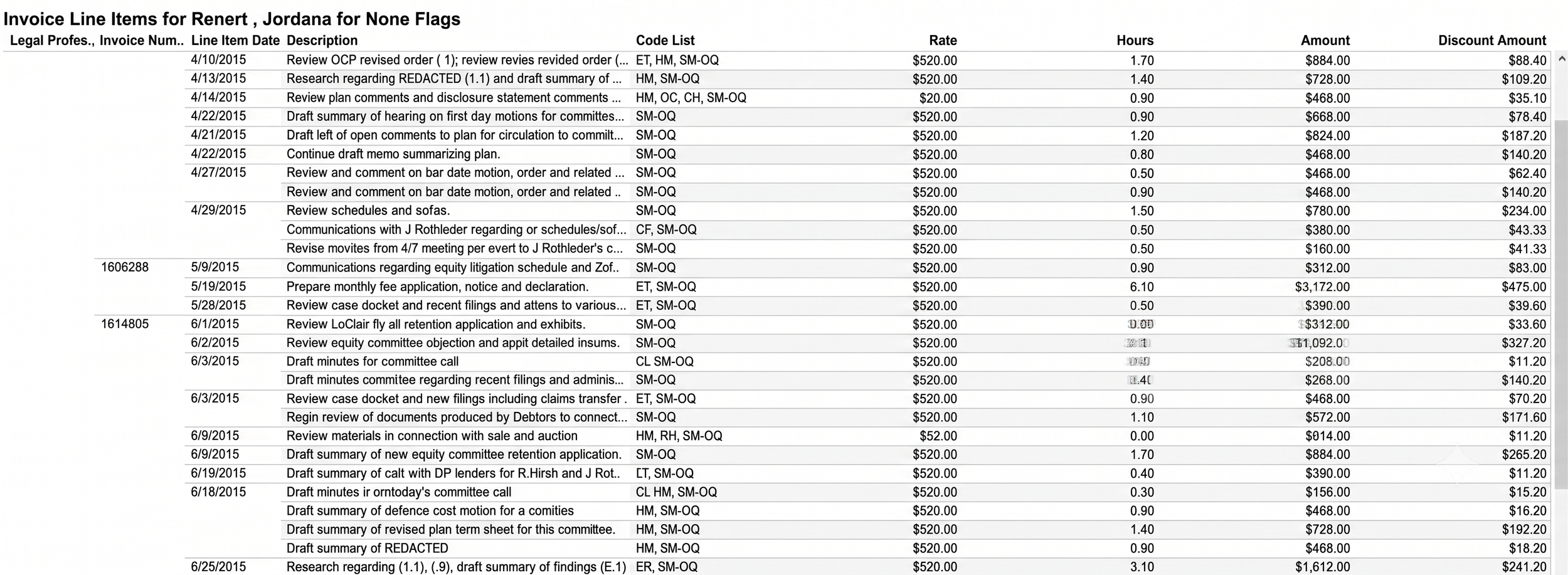
Staffing Efficiency: 8th year flagged for Skill Set Mismatch-Overqualified on $42K in line items (SM-OQ)
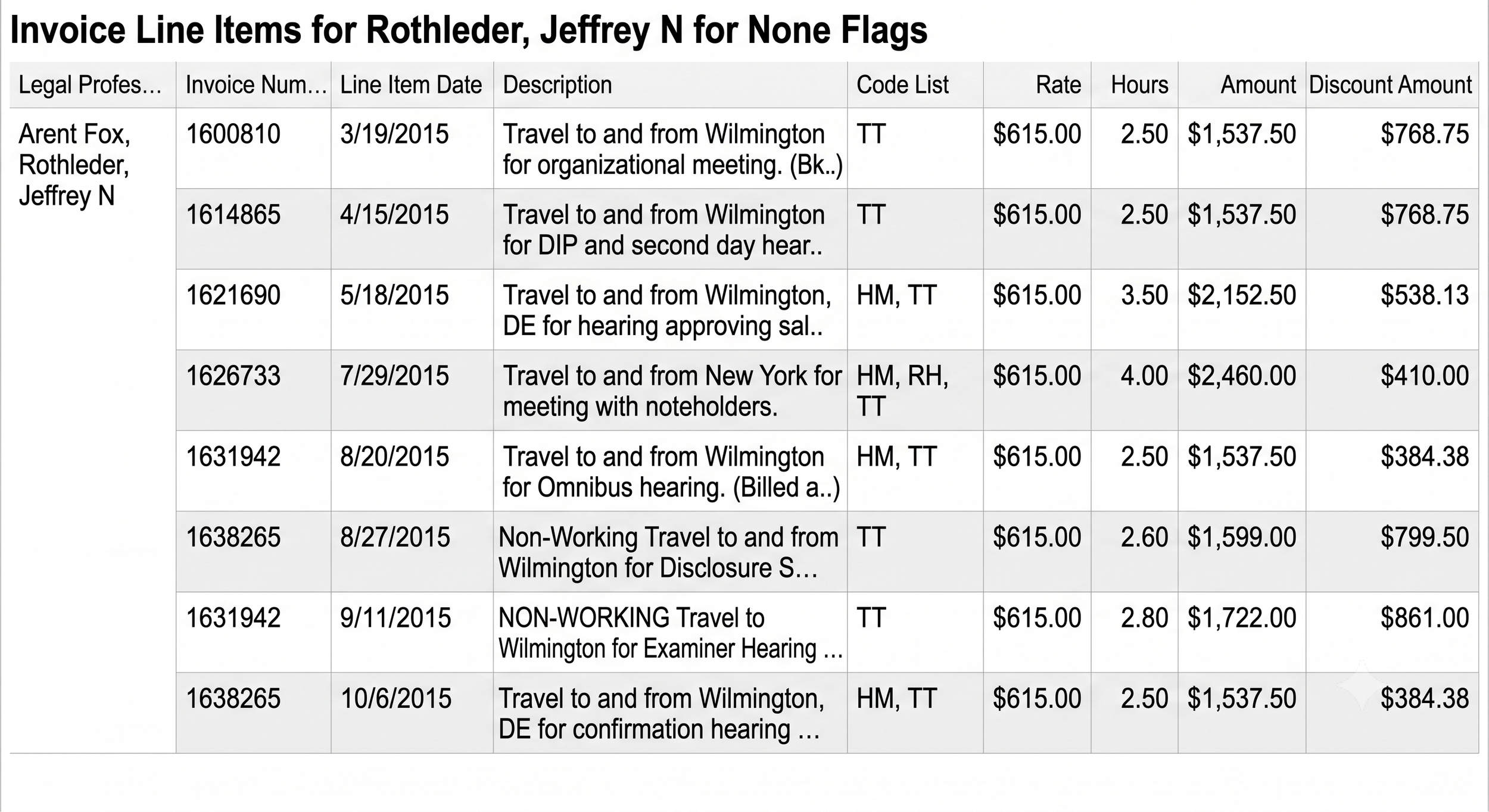
Workflow Efficiency: Travel Time of three attorneys is isolated to ensure compliance with billing guidelines (TT).
Ashby & Geddes, PA
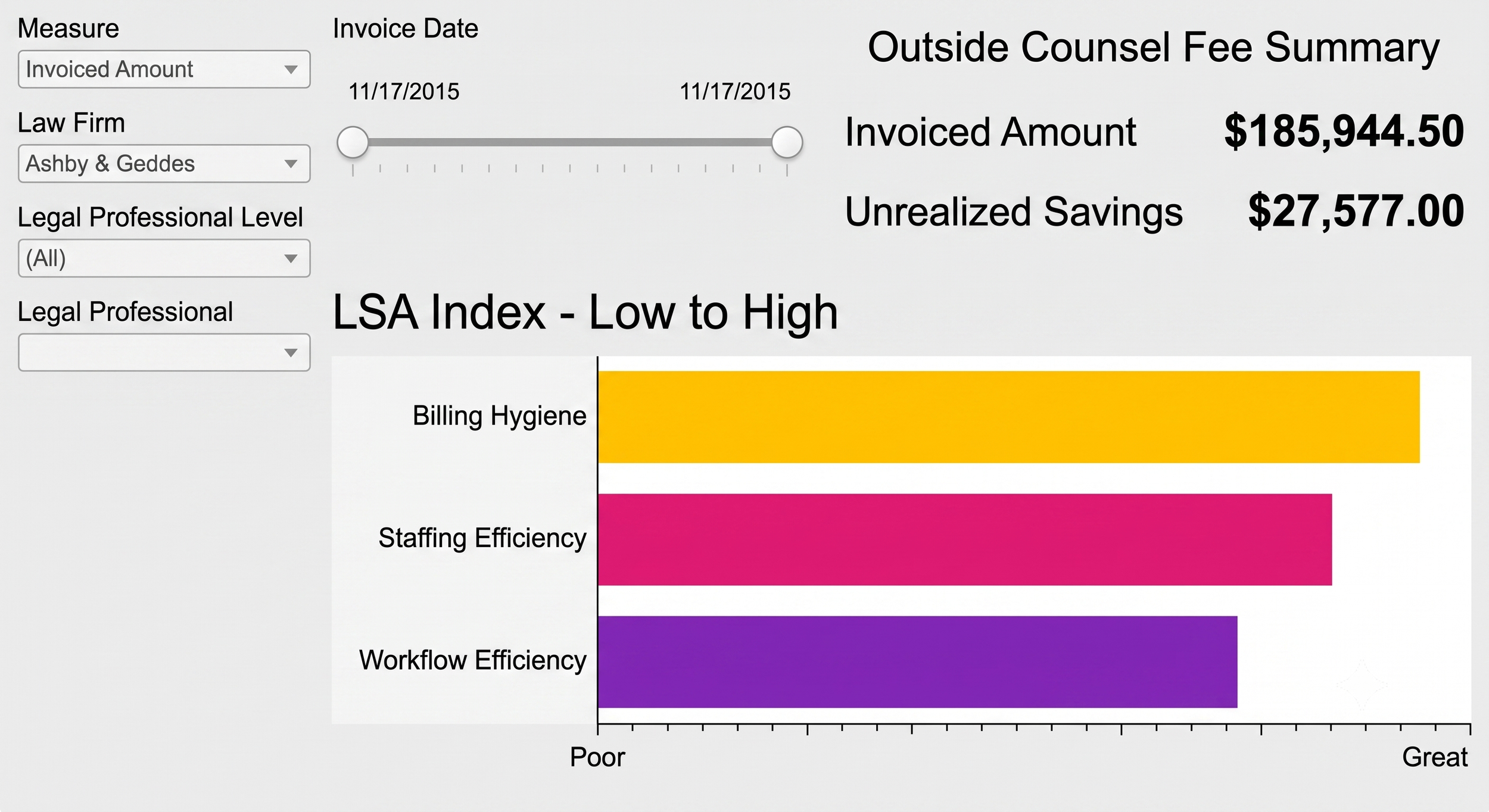
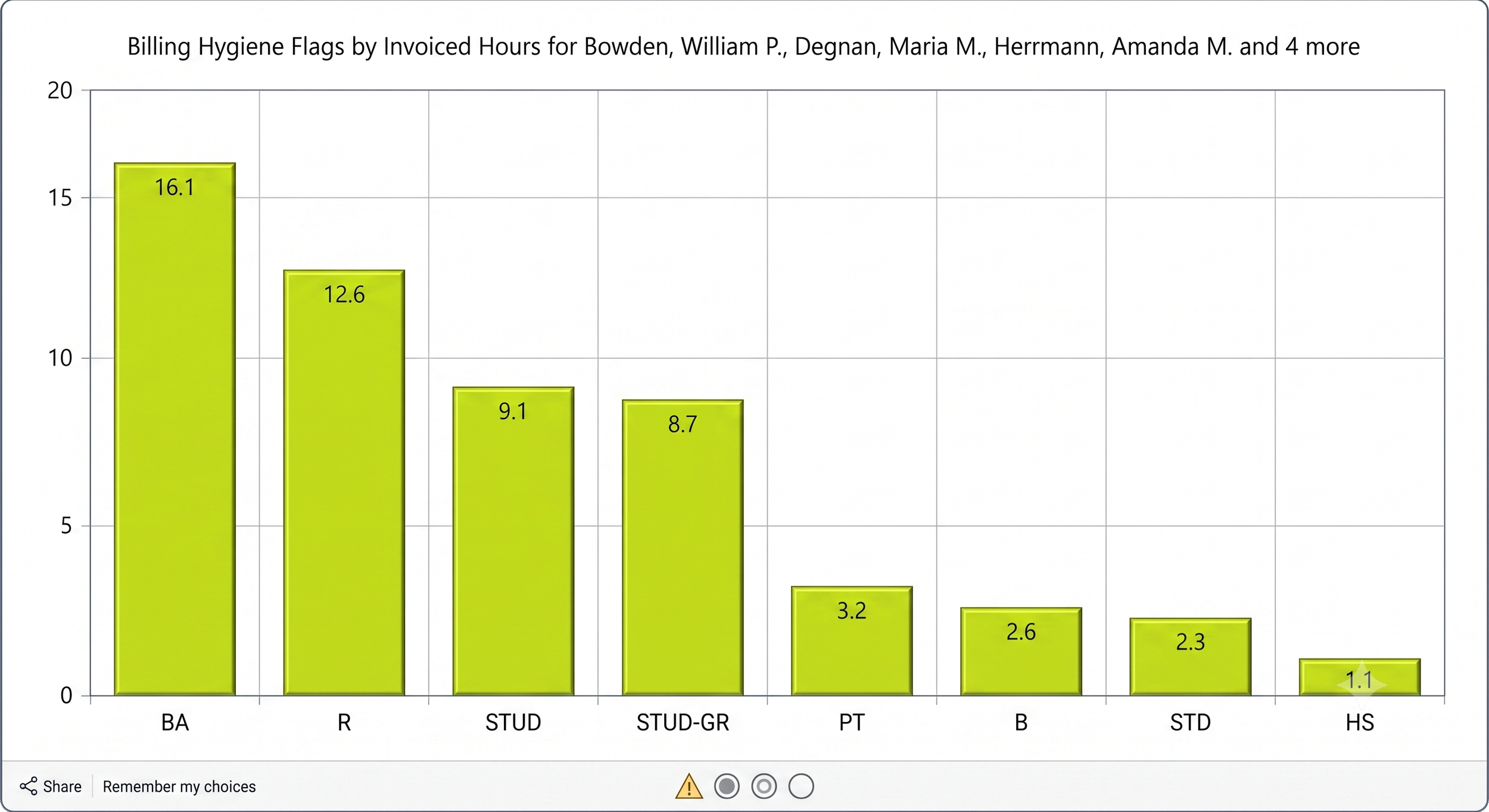
Billing Hygiene: Excellent; only 13% of total hours billed (i.e., 51 of 385 hours) flagged for billing hygiene.
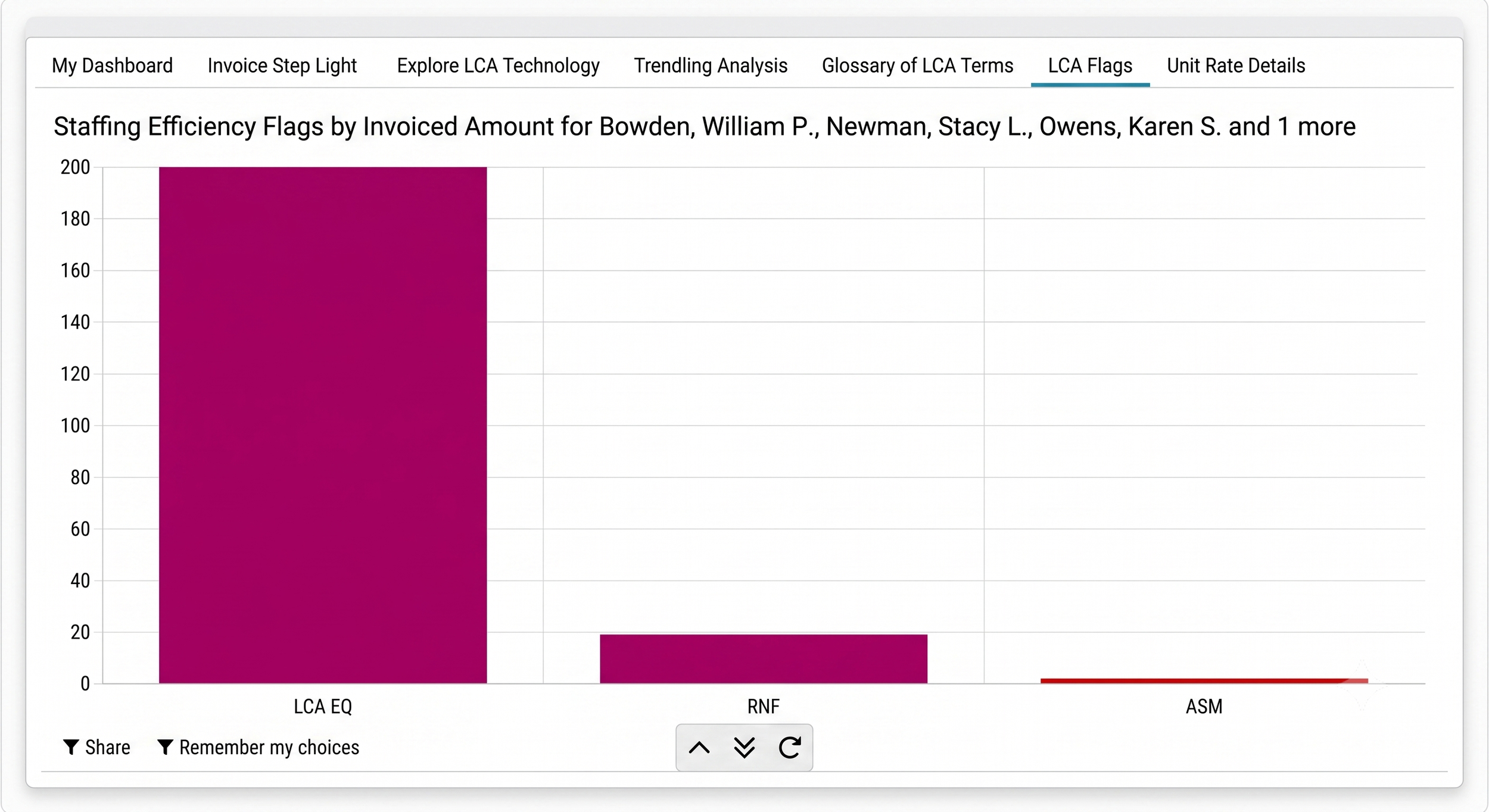
Staffing Efficiency: Excellent; four senior timekeepers flagged for Skill Set Mismatch-Overqualified on only 14% of total amount billed (SM-OQ).
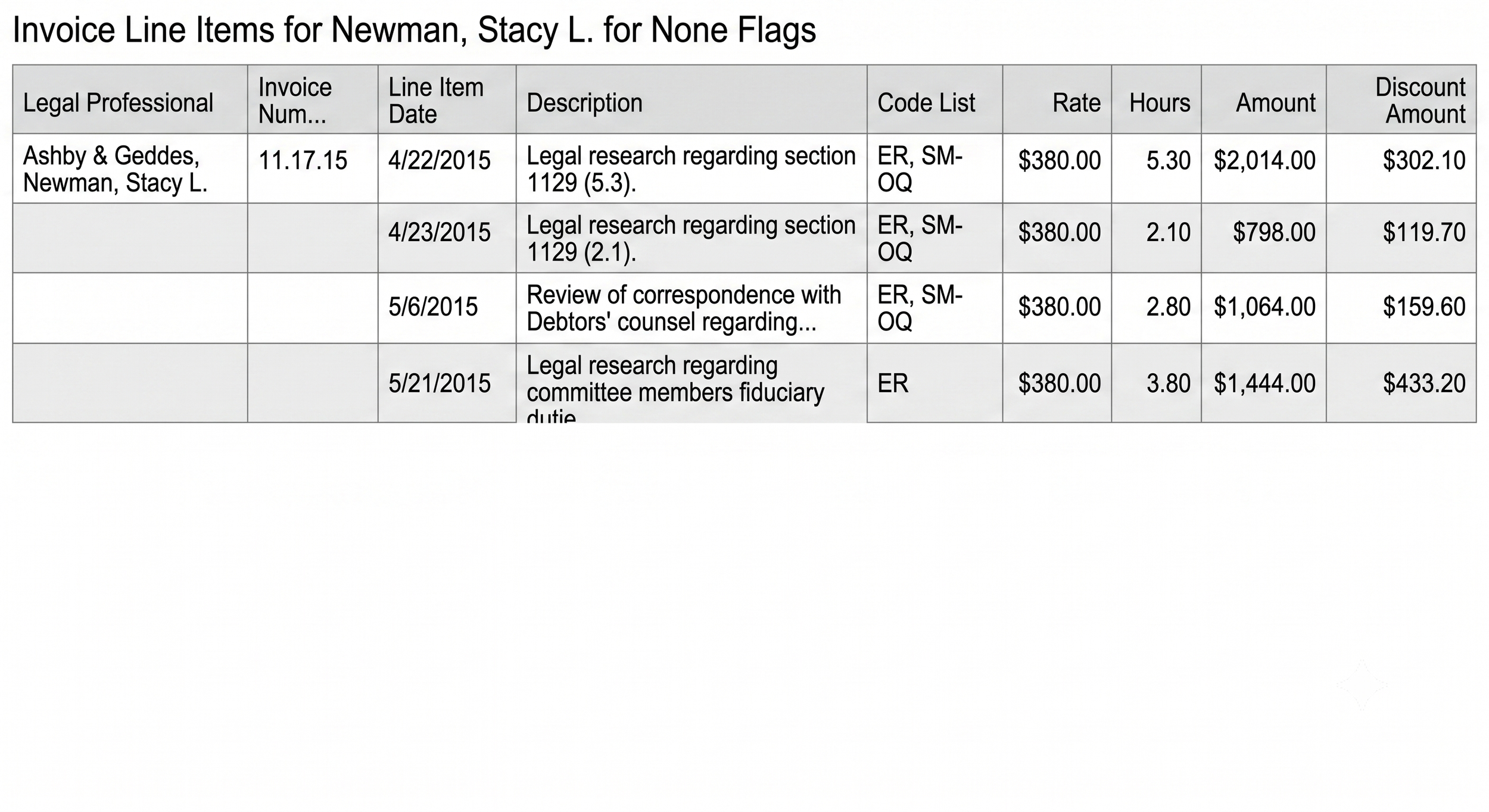
Workflow Efficiency: Good workflow efficiency with Excessive Research hours by a senior attorney posing only a minor issue (ER).
Blank Rome, LLP
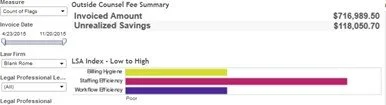
Billing Hygiene: Senior attorney flagged for over $42K in Vague Entries (VE).
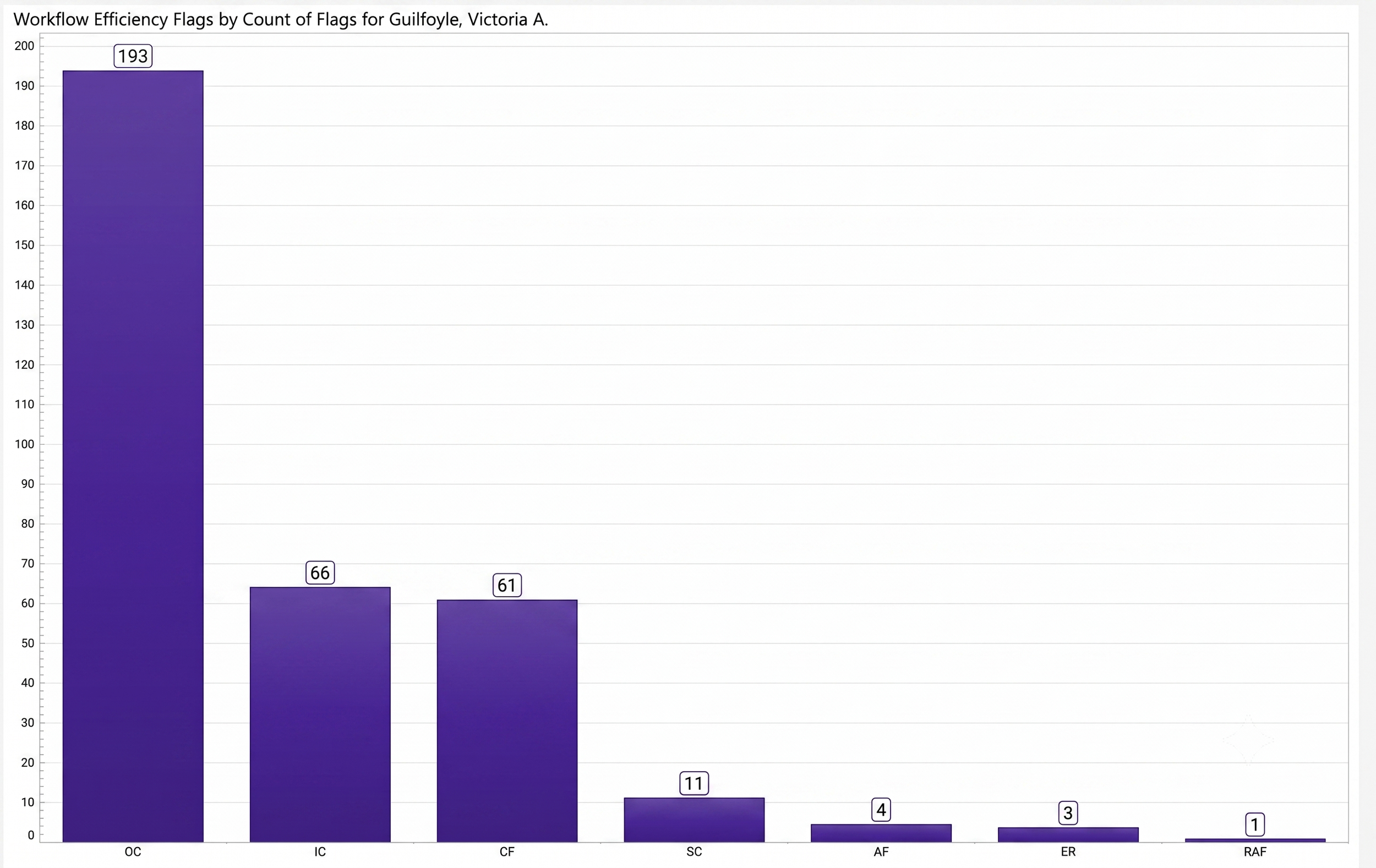
Workflow Efficiency: 194 of 440 line items recorded by associate were flagged for internal Office Communications (OC).
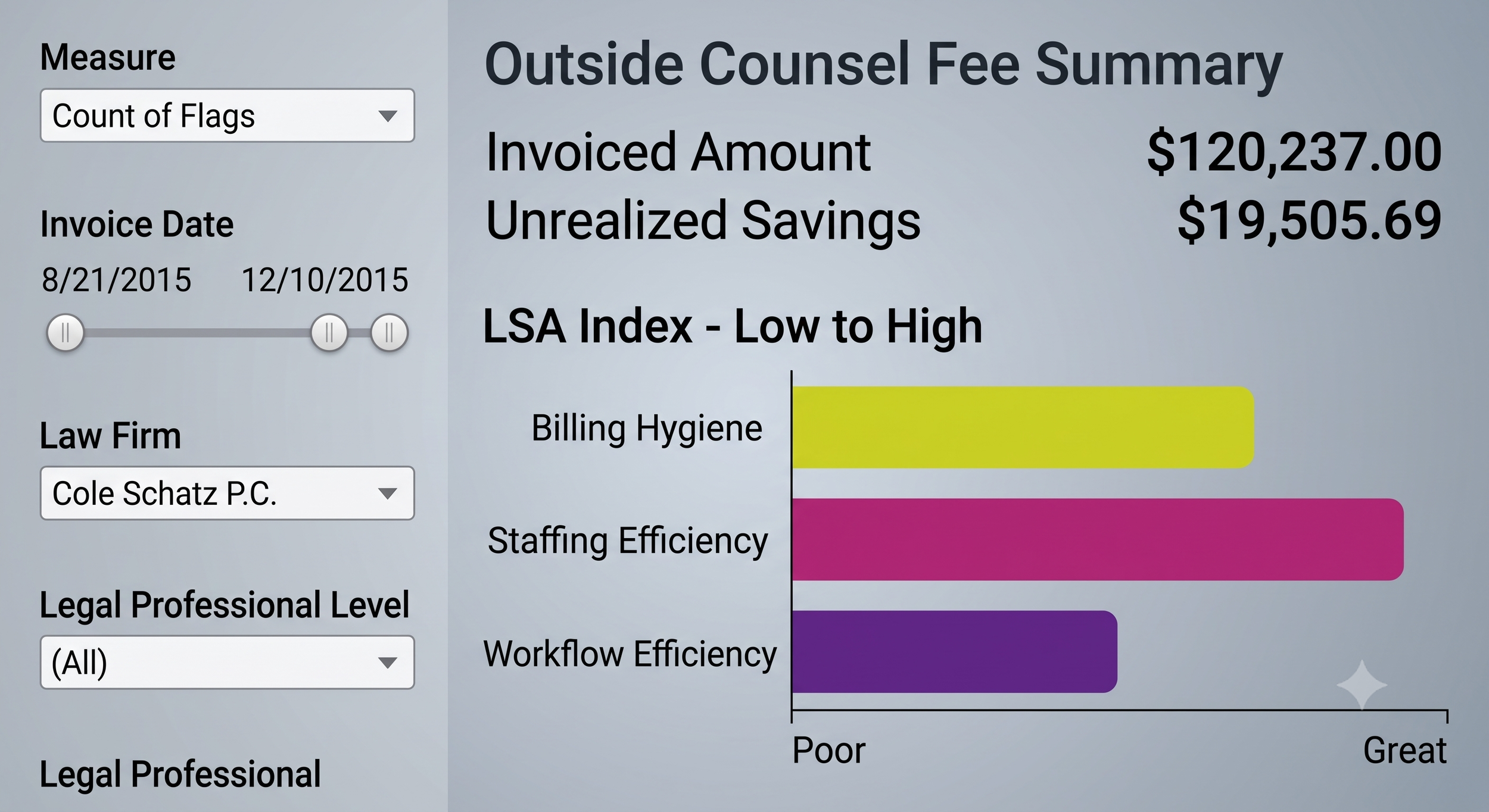
Cole Schotz, P.C.
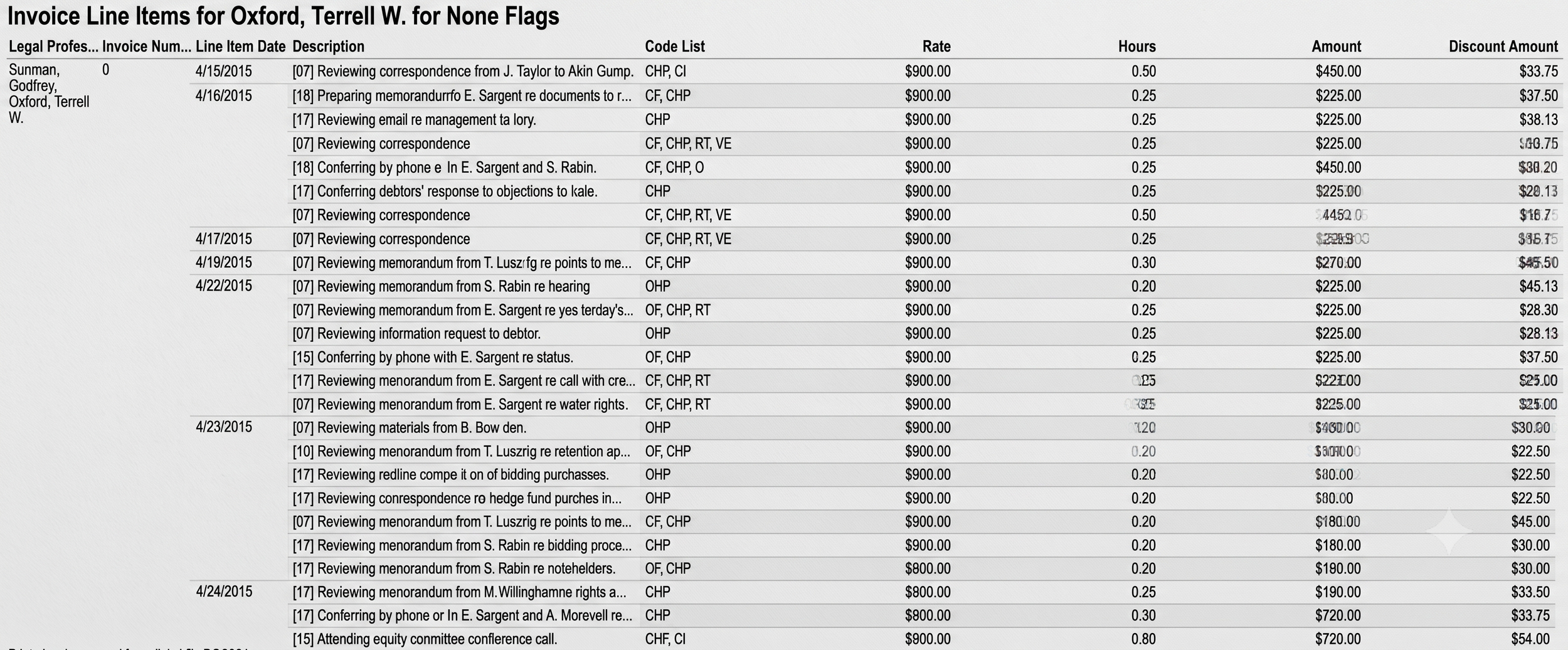
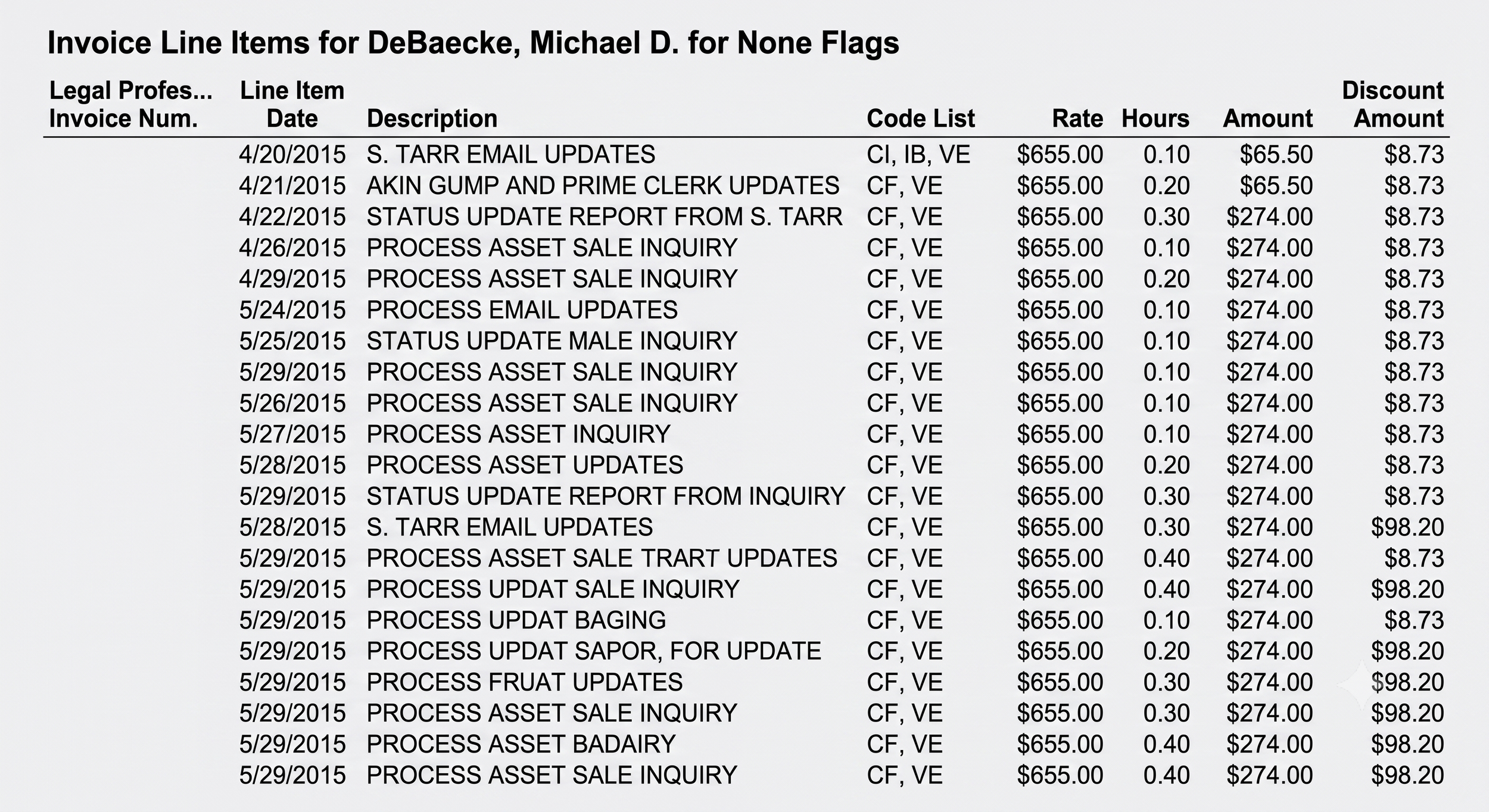
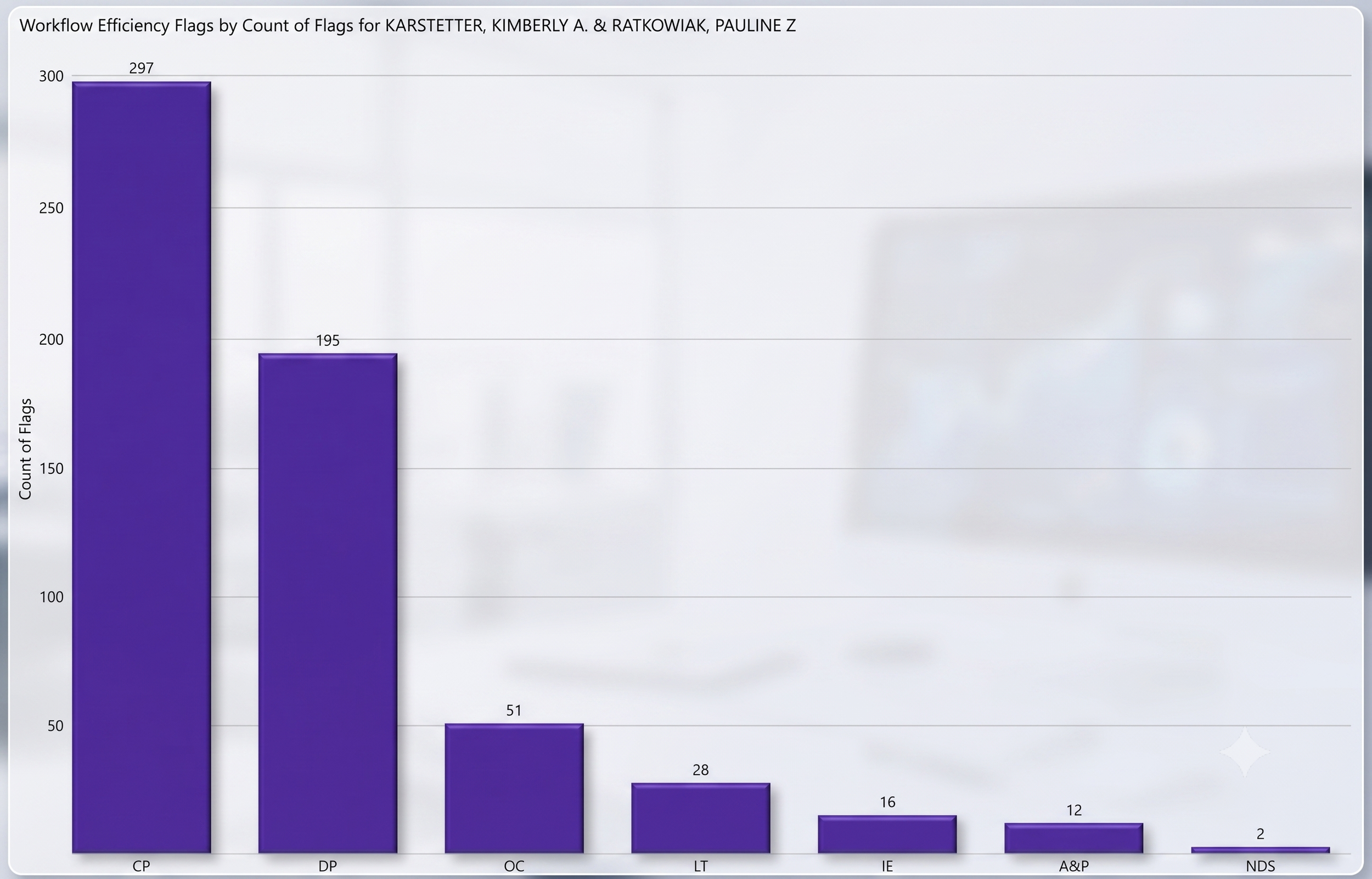
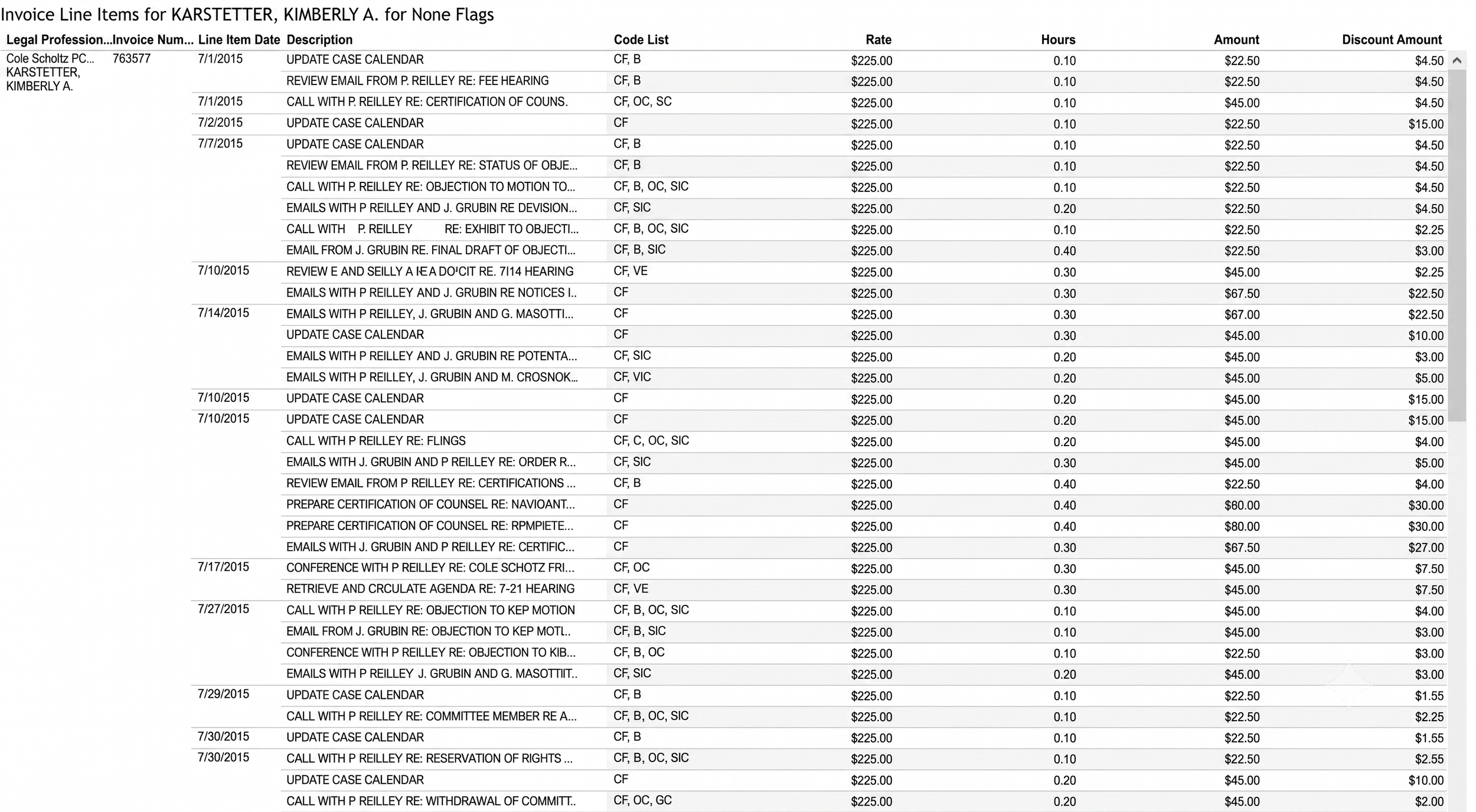
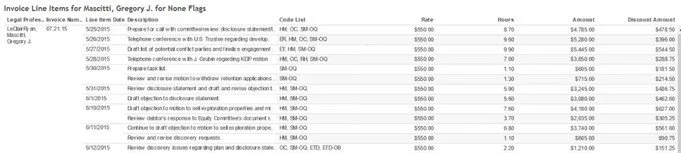
Workflow Efficiency: 38.2% (297 of 776) of time entries by two paralegals were flagged for potential File Churning (CF). See “REVIEW EMAIL” and “UPDATE CASE CALENDAR” line item entries below.
LeClair Ryan, PC
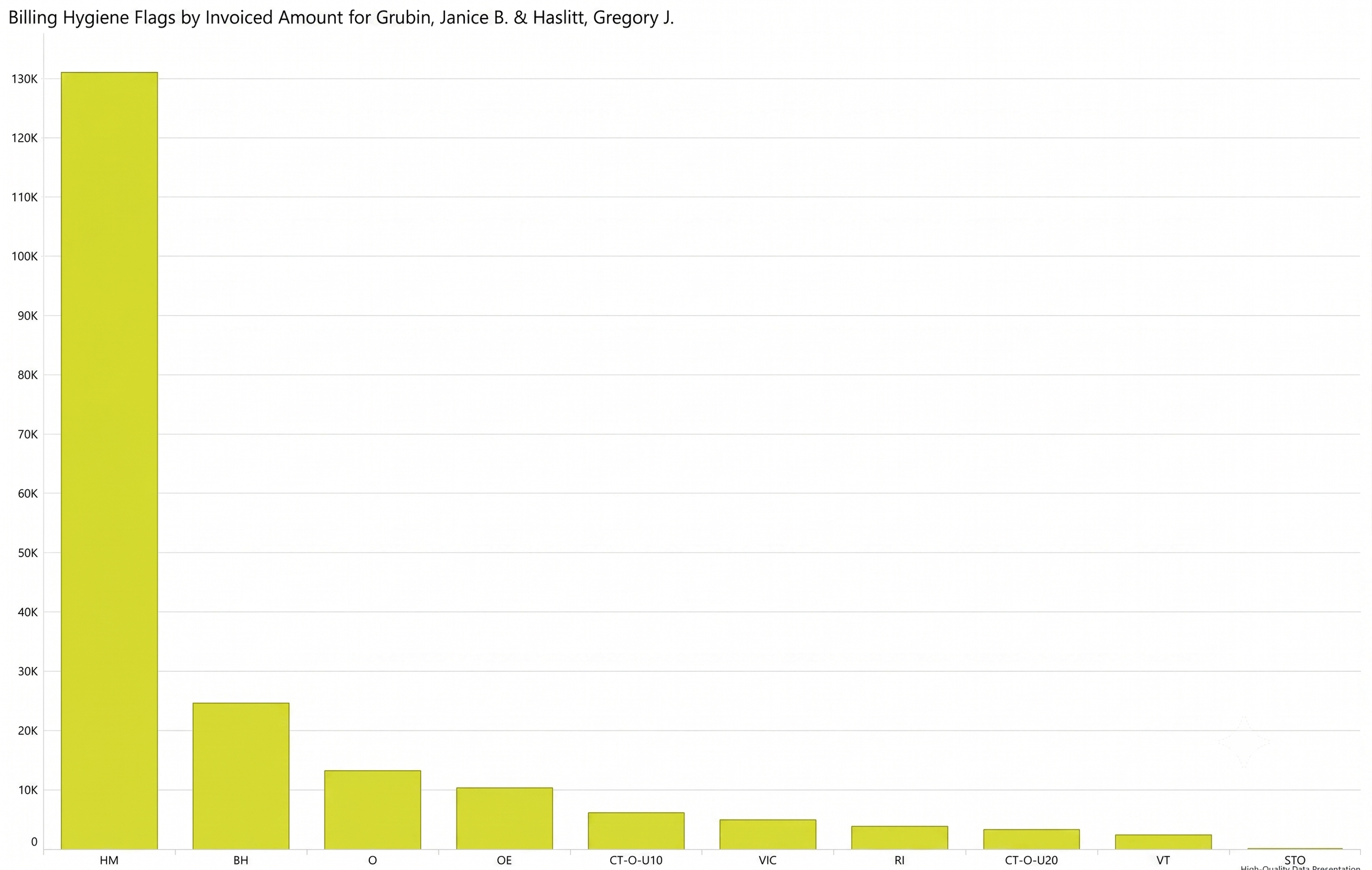
Billing Hygiene: Two senior attorneys recorded significant number of days billing over 8 hours per day (HM).
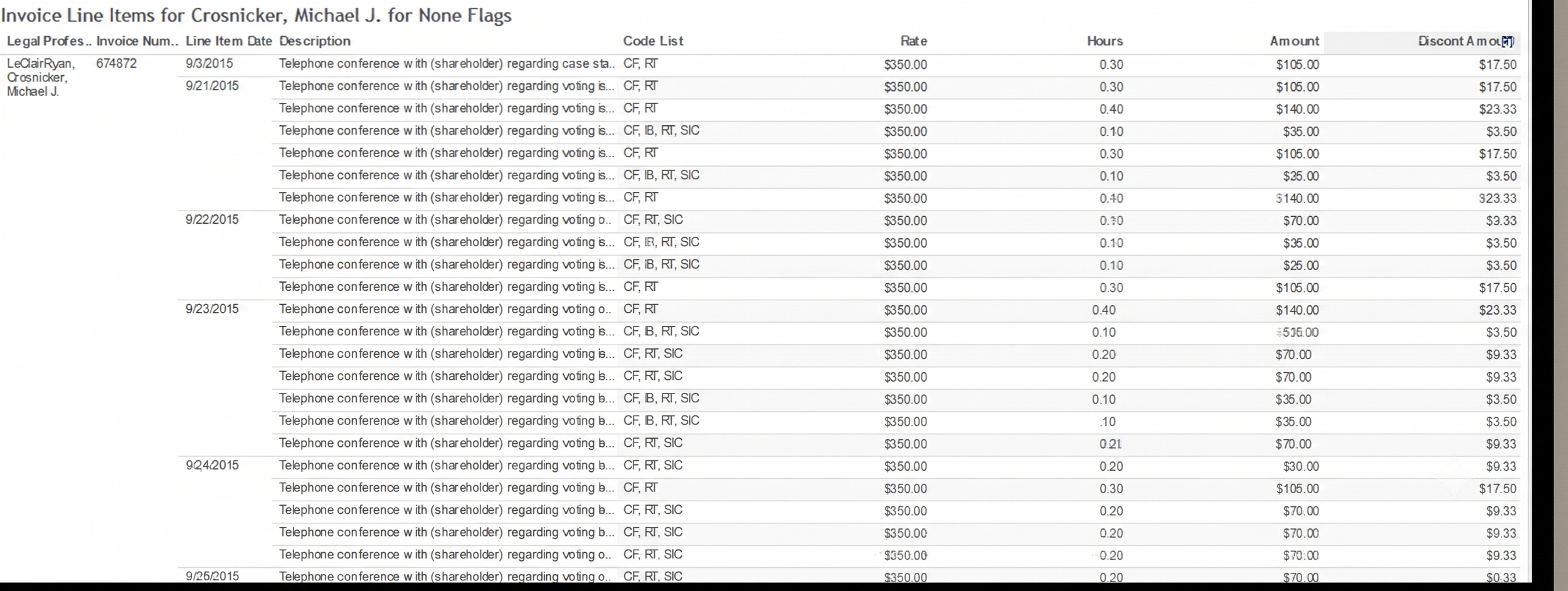
Workflow Efficiency: 42.4% (59 of 139) of time entries by associate were flagged for potential File Churning (CF).
Staffing Efficiency: Partner flagged for Skill Set Mismatch-Overqualified on $48K in line items (SM-OQ).
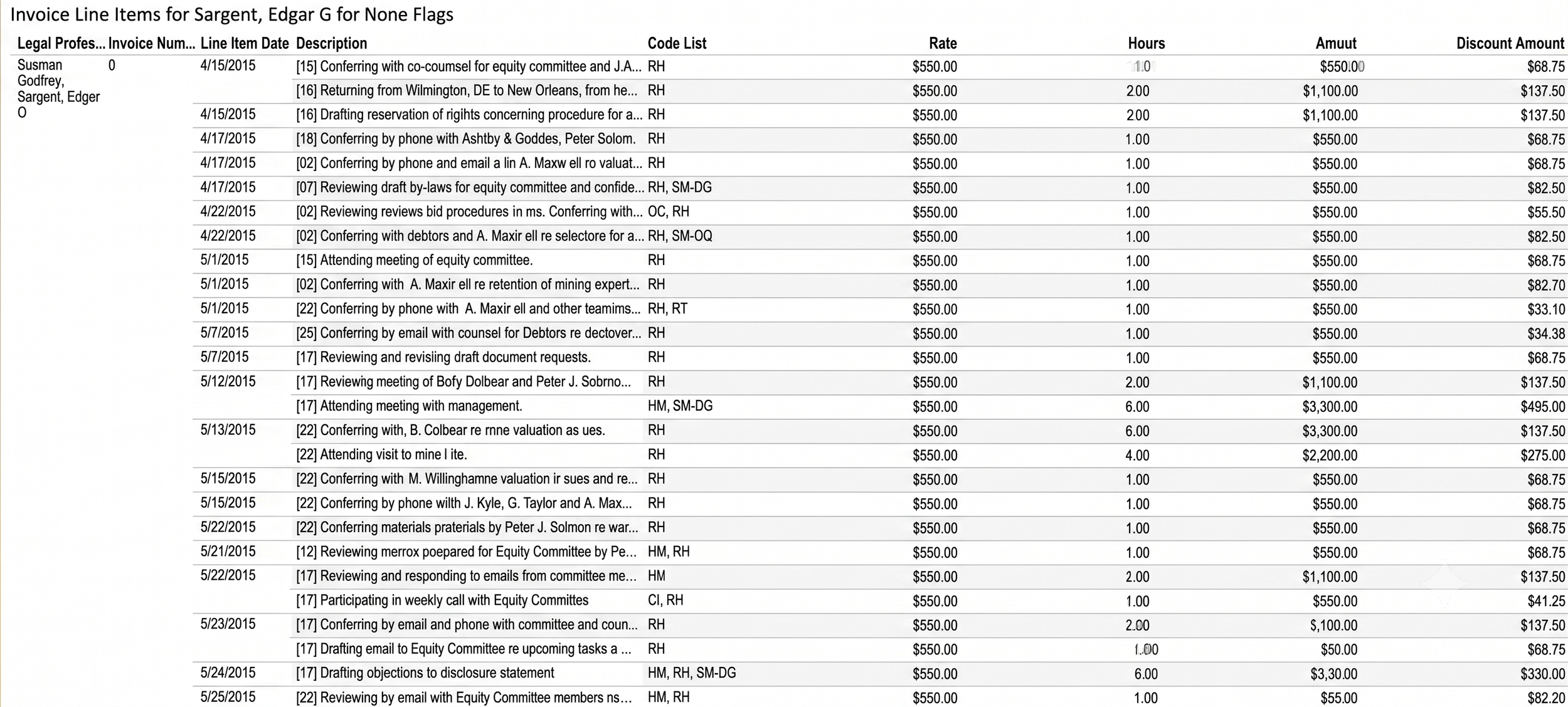
Susman Godfrey
Billing Hygiene: Partner recorded round hour time (1.0, 2.0, 3.0 etc…) in 26.5% of line item entries over 2.5x greater than the statistical probability (RH).
Workflow Efficiency: Partner shadowing the matter "sounding board" with small time charges (CHP)